Field of Science

Showing posts with label Chemistry World. Show all posts

Is India's new antimalarial drug worth the hype?

I have an article published in Chemistry World today discussing the hype around this drug launch. I've already written about Ranbaxy's new antimalarial drug Synriam on this blog in the two previous posts, but there are a few new pieces of information in the recent article.

Here is a full set of references for the article:
  1. Ranbaxys' press release
  2. Ranbaxy's Synriam brochure
  3. Ranbaxy, Cipla unveil malaria combo drugs - DNA
  4. Daiichi to buy Ranbaxy stakes for $4.6 bn - The Financial Express
  5. Malaria deaths are down but progress remains fragile - The WHO
  6. Jonathan Vennerstrom et al. Nature 2004
  7. Jonathan Vennerstrom et al. J. Med. Chem. 2010
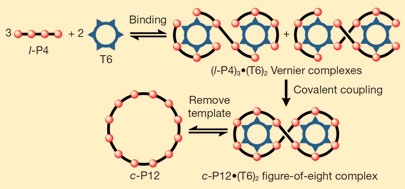
Macromolecules from miniature templates

From my article in Chemistry World:

UK researchers have designed a new highly effective method to construct large molecules of a defined size using simple templates.Recent approaches to the construction of nanomaterials have made use of advanced methods such as living polymerisation and self-assembly, but these techniques often produce a mixture of products. Taking inspiration from nature, which uses sophisticated templates such as the ribosome to make precise complex molecules, Harry Anderson's group at the University of Oxford has developed a new strategy to synthesise macromolecules with precise lengths using basic templates...read more.

Using fruit flies' sweet tooth

From my article in Chemistry World:

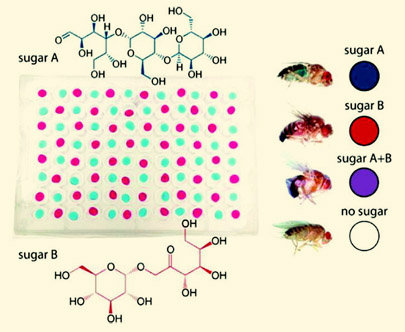
Australian researchers have used fruit flies' sweet tooth to help in attempts to develop new sugar alternatives.The Drosophila melanogaster species of fruit fly has marked similarity to humans in its choice of sweeteners, a fact exploited by a team led by Anne Rae at the Commonwealth Scientific and Industrial Research Organisation in Queensland to aid the search for new sweeteners as demand for healthier sugar alternatives grows...read more.

Irish drug industry fears bailout tax terms

Any increase in Ireland's corporation tax rate as part of a financial bailout could hurt the country's rapidly expanding pharmaceutical industry, currently its largest contributor to corporation tax.

Ireland is in talks with the European Union and the International Monetary Fund regarding a potential rescue package to stabilise the Irish banking system and protect the euro. So far Irish leaders have ruled out any increase in its corporation tax rate as part of the deal. But media reports have suggested that member states may try to force an increase to guarantee a return on their investment.. read more.

Porous silica makes funky coloured films and could lead to warmer windows

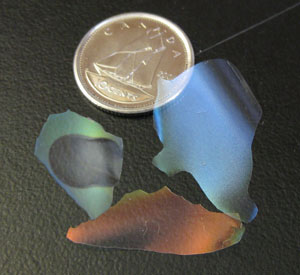
Using nanocrystalline cellulose (NCC) from wood pulp, Canadian researchers have for the first time prepared mesoporous chiral nematic structured silica materials that may have potential as tuneable reflective filters in smart windows, chiral catalysts in synthesis and even as optical sensing devices.. read more.

Smuggling key factor in China's rare earth actions


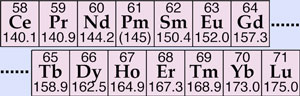
Widespread smuggling of rare earth materials and rapidly increasing domestic demands are key factors in China's recent moves to drastically reduce exports of the sought after elements.In July, China, currently in control of almost the entire global rare earths market, announced a reduction of up to 72 per cent in its exports for the second half of 2010 compared to the same period last year. Despite its position as the world's major producer of rare earth elements, as the materials bleed out from the country, China has attempted to acquire other mines around the globe to maintain its control of the growing global market... read more.

UK carbon capture competition for £1 billion becomes a one horse race

On the same day UK ministers revealed a £1 billion fund for the development of carbon capture and storage (CCS), power company E.ON UK announced it is pulling out of the government's national CCS competition, leaving just one company in the race. In 2007 the government announced a competition to build one of the world's first commercial scale CCS demonstration plants in a bid to strengthen the UK's position as a world leader in cleaner fossil fuel technology. Before E.ON's departure from the race, energy firms BP and Peel Power had already pulled out of the competition in 2008 and 2009 respectively... read more.

Mining soil DNA for molecular decorators

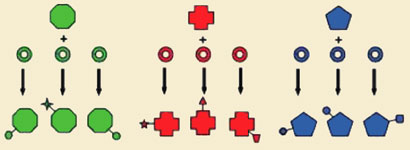
Enzymes (rings) found in eDNA libraries can modify glycopeptides cores (top) in new ways
US Researchers have harnessed enzymes hidden in the genomes of soil bacteria to modify a natural antibiotic molecule in ways that would be difficult or impossible by traditional synthesis. The technique could be applicable to other families of molecules, providing easy access to a huge variety of complex molecules... read more.
ResearchBlogging.org
Banik, J., Craig, J., Calle, P., & Brady, S. (2010). Tailoring Enzyme-Rich Environmental DNA Clones: A Source of Enzymes for Generating Libraries of Unnatural Natural Products Journal of the American Chemical Society DOI: 10.1021/ja105825a

Britain should take lessons from USA

Skilled workers may be queuing up to enter the UK, but only a fraction will be allowed in
In June the government announced a temporary cap on the number of skilled workers from non-EU states that can enter Britain. The move prompted concern in the scientific community that it would lose access to a rich pool of international talent and potentially jeopardise the UK's ability to remain at the forefront of global research.
Before this annual limit is made permanent in April next year, the government could learn lessons from other scientifically advanced nations - also aware of the need to control migration - who have made exceptions for researchers in their immigration policies... read more.

India calls for ambitious increase in science funding

The Scientific Advisory Council to the Prime Minister of India has advised the government to increase its science funding from less than 1 per cent of GDP to up to 2.5 per cent by 2020. It has also recommended overhauling the management of science in the country to increase innovation in the research community. 


India is becoming an economic power but without scientific leadership this growth might be unsustainable, says distinguished materials chemist CNR Rao, chairman of the Science Advisory Council. 'This report has been outlined to bring change to the scientific management system and make India a leader in science', he adds... read more.
Related Posts Plugin for WordPress, Blogger...