Field of Science

Showing posts with label India. Show all posts

Is India's new antimalarial drug worth the hype?

I have an article published in Chemistry World today discussing the hype around this drug launch. I've already written about Ranbaxy's new antimalarial drug Synriam on this blog in the two previous posts, but there are a few new pieces of information in the recent article.

Here is a full set of references for the article:
  1. Ranbaxys' press release
  2. Ranbaxy's Synriam brochure
  3. Ranbaxy, Cipla unveil malaria combo drugs - DNA
  4. Daiichi to buy Ranbaxy stakes for $4.6 bn - The Financial Express
  5. Malaria deaths are down but progress remains fragile - The WHO
  6. Jonathan Vennerstrom et al. Nature 2004
  7. Jonathan Vennerstrom et al. J. Med. Chem. 2010

Has India's new anti-malarial drug really been 'indigenously' developed?

I woke up to the news that Ranbaxy India has launched it's first indigenously developed drug: Synriam. A drug for malaria treatment, it is a combination consisting of arterolane maleate 150 mg and piperaquine phosphate 750 mg. I was pleased to hear that India's drug discovery initiatives had matured enough to produce new drugs and that the drug companies were acting very responsibly by working on a poor man's disease. Naturally, I dug into the story a little more.

Ranbaxy's press release (which is where most news sources have got their information from) claims:
  1. Synriam has been approved by Drug Controller General of India (DCGI) for marketing in India and conforms to the recommendations of the World Health Organization (WHO) for using combination therapy in malaria.
  2. Synriam has a high cure rate of 95%.
  3. Phase III clinical trials were conducted in India, Bangladesh and Thailand.
  4. Dose regimen is better than anything out there. Three pills over three days.

Arterolane's chemical structure
Credit: Wikipedia
So far so good. Out of curiosity I looked up the chemical structure of arterolane and was surprised to see that it features both an ozonide and an adamantane group in it. In all my synthetic organic chemistry work, I hadn't seen a drug like that. After all, organic ozonides (3 oxygen atoms in a 5-atom ring) are more explosive than organic peroxides (R-O-O-R)!

It turned out that Derek Lowe of the famous In the Pipeline blog had written about arterolane in 2009. At the time it was in Phase III trial, which I assumed were the trials that Ranbaxy was conducting. But it turned out that arterolane was developed by a collaboration between researchers in the US, the UK, Switzerland and Australia who were funded by the World Health Organization and Medicines for Malaria Venture (a Swiss non-profit). They published this work in Nature in 2004 and further SAR (Structure Activity Relationship) studies in J Med Chem in 2010.

So Ranbaxy did not develop the drug from scratch? But the press release quotes Arun Sawhney, CEO and Managing Director of Ranbaxy which misleads people to think so: "It is indeed gratifying to see that Ranbaxy’s scientists have been able to gift our great nation its first new drug, to treat malaria, a disease endemic to our part of the world. This is a historic day for science and technology in India as well as for the pharmaceutical industry in the country. Today, India joins the elite and exclusive club of nations of the world that have demonstrated the capability of developing a new drug".

So Ranbaxy mixes a known active compound (piperaquine) with a new compound that someone else found to be active (arterolane) and claims that they developed a new drug? In an interview in LiveMint, Sawhney says, "Ranbaxy spent around $30 million on Synriam and the contribution from DST [India's Department of Science & Technology] was Rs.5 crore. The drug went through several phases of development since the project began in 2003. We did not look at this as a commercial development. Instead, this is a CSR [Corporate Social Responsibility] venture for us." That's a give away because developing a new drug from scratch has to cost more than $30 million + Rs.50 million. Why wasn't this put in the press release?

The initial high that I got from the news that Ranbaxy launches first 'made in India' drug just got murdered. India is yet to see a drug that it has 'indigenously' developed. I am sure that Synriam will do a lot of good for India and the many developing nations that suffer from a malaria epidemic, but it will be because of a 'made in India' drug not one that has been 'developed in India'. It's a shame that Ranbaxy did not acknowledge that the development of arterolane was funded by WHO and that their scientist have worked on developing a combination of two compounds both of which weren't developed in their lab. They should make it clear that they are claiming the combination to be a 'new drug', not the molecules that make up the combination.

Like an Apple product says, "Made in China. Designed in California.", Synriam should say, "Made in India. Developed by WHO + MMV + Ranbaxy."

UPDATE: Vidya Krishnan, LiveMint reporter who covered this story, answered my question about patentability. She said that Ranbaxy has a joint patent with the Government of India for the 'unique' combination that they have developed, not for arterolane itself.

UPDATE 2: I spoke to the lead author of the Nature and J Med Chem paper Jonathan Vennerstrom who confirmed that MMV holds the patent for arterolane and has licensed it to Ranbaxy since 2003. Thus, the clinical trials mentioned in both the papers were Ranbaxy's work even though arterolane was developed by other researchers.

Oral cancer in India: A public health menace

Oral cancer is the most prevalent of all cancers in India, which sees 5.6 million cancer deaths every year. A cheap and widely available chewing tobacco product, gutka, has some 5 million children addicted to it. The government of one state in India has woken up to its ill-effects, and, in a drastic step, it has banned sale of all chewing tobacco products.

I have an article published on the Economist's Asia blog, Banyan, discussing this.

References for the article:
  1. Most cancer patients in India die without medical attention: study, Down to Earth, March 29, 2012
  2. Madhya Pradesh bans gutkha and other chewing tobacco products, Down to Earth, April 3, 2012
  3. SC bans plastic gutka sachets from March 1, Times of India, December 8, 2010
  4. Global Adult Tobacco Survey: India, World Health Organization, October 19, 2010
  5. Gutka still sold in plastic sachets, The Hindu, March 13, 2011
  6. 2011 Census Data: Madhya Pradesh, Government of India

With due respect sir, this does not make any sense

An article in the Hindu titled, 'The way to get man back on his feet' has the following paragraphs in it:
"It is the invisible forces of electromagnetic energy that keep us alive and all those frequencies like cellphones, microwave ovens, radio frequencies and even the scalar energy affect our DNA, RNA and protein synthesis."
"An added advantage is that energy signals travel at a phenomenal speed of 1, 86,000 miles per second, while chemical transmission is just one centimetre per second!! While drugs take months to get one back on one's feet after a major illness, energy healing takes only hours to days!" 
The Hindu, is an English daily in India with the third largest readership amongst Indian English dailies (~2.16m). It is also amongst the very few India dailies that have their own science reporters and I've always held their coverage in high regard. This article features in their open pages in the opinions section. I can assume safely that either they wanted the author to be ridiculed or that their standards have indeed fallen.

Some one needed to deconstruct the seemingly incoherent article and Amar Ghaisas took up that charge. He tries hard to uncover what the author, who is a former professor of cardiology, Middlesex Hospital Medical School, University of London and former Vice-Chancellor, Manipal University, might mean in his bizarre usage of the terms such as 'holistic medicine', 'alternative therapies', 'eastern philosophy' and 'quantum physics'. But try as he might, he fails to find any coherent scientific explanation for those thoughts.

See Amar's detailed effort here.

The Truth about Antioxidants and its coverage in Indian newspapers

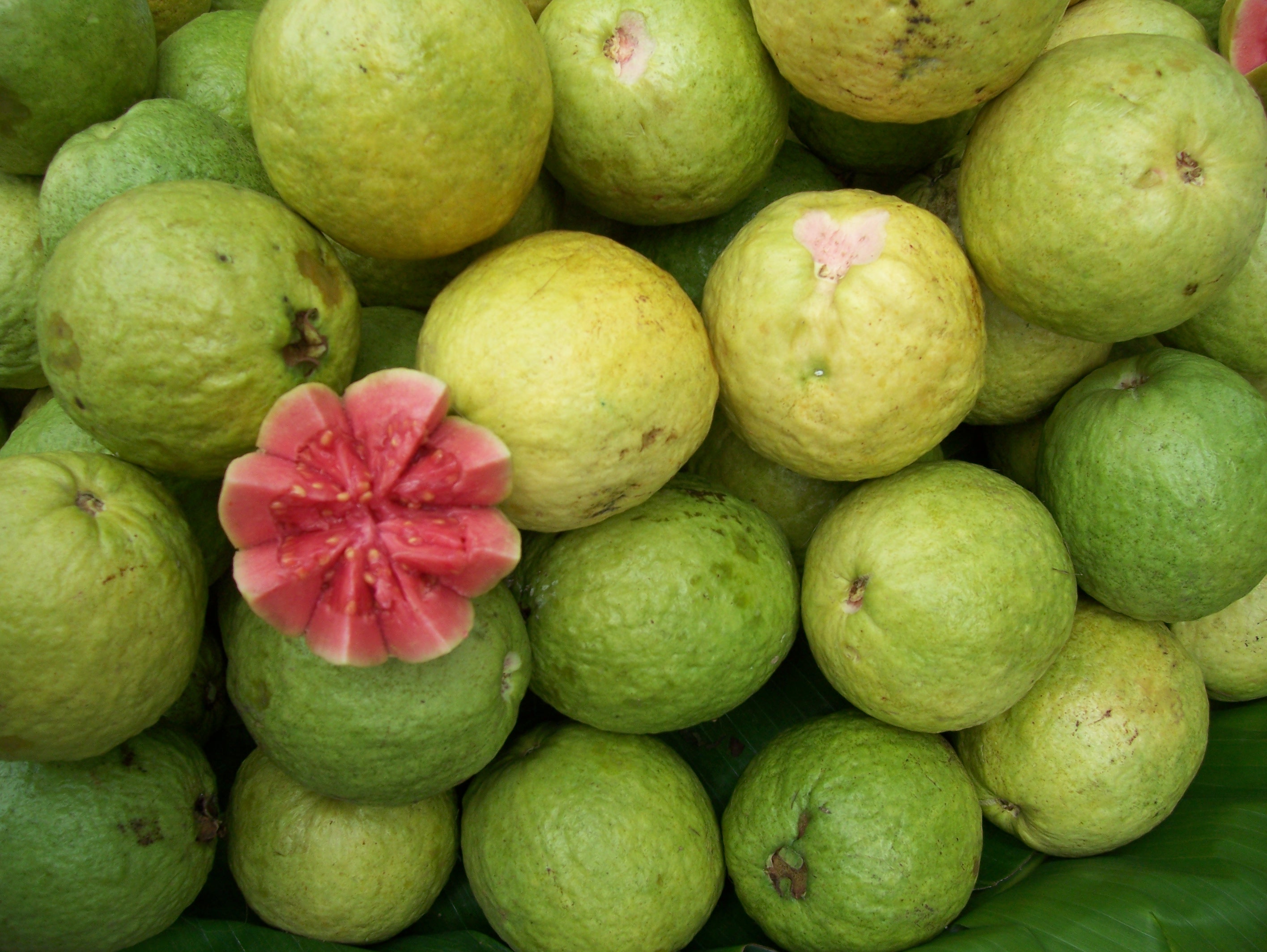
Guavas on sale in Bangalore
(Source: Wikipedia)
Times of India (TOI) published an article today which claimed that guava is the healthiest fruit and pineapple is the least! 

The claim is based on a study that evaluated 'the amount of natural antioxidants level of [sic] 14 fresh fruits commonly consumed in India'. The article cited the study that was published in Food Research International, an Elsevier journal. But surprisingly when I looked up the paper it appeared that the results of the study were published in May 2010!

Antioxidants have been featured as a healthy choice for a long time. An article in Slate mentions that the story began in the 1940s when Denham Harman proposed that 'the same free radicals that were cutting into petroleum industry profits could also simply and completely explain the phenomenon of aging. Better yet, he said, their effects could be ameliorated by something called antioxidants'.

As tempting as the theory seems, unfortunately as the same article points out, there is no evidence of antioxidants inducing any health benefits. Instead, a meta-analysis of studies that assess the effect of antioxidant supplements on mortality showed that 'treatment with beta carotene, vitamin A and vitamin E may increase mortality. The potential roles of vitamin C and selenium on mortality needs further study.'

Having previously read the article in Slate, when I came across the article in TOI it struck me as odd that a 18-month old research paper suddenly seemed to surfaces in not only Indian newspapers but also in a British and a Malaysian newspaper within 24 hours. I got in touch with the lead researcher on the paper, Dr. Sreeramulu, congratulating him and expressing my surprise. He responded quickly and said, "Yesterday they contacted me about the work (and) today (the) article appeared in Times of India. (In the) morning my friend informed me about this." I also, asked him who funded his research, to which he said, "I am a regular staff member of NIN (National Institute of Nutrition), Hyderabad. Our Institute funded the work as (an) intramural project."

I asked him about the funding of the project given that the antioxidant market worldwide is pretty big. According to a report it has been growing at ~4% annually with reported sales of $3.7 billion in 2007 (the slate article calls it a $23 billion industry but I couldn't find the source for that). Having not got any satisfactory answer to the reason why TOI showed sudden interest, I thought it might be worth looking at what the coverage of antioxidants in top Indian newspapers.

Here are the search results for 'antioxidants' on TOI, Hindustan Times & The Hindu websites.

Sure enough I got plenty of articles mentioning the many studies that show antioxidants do wonderful things and many that reported the extraordinary antioxidant content in some foods. But amongst all that noise I found only three articles that mentioned studies showing adverse effects or no effects (here, here & here).

The lack of coverage of the studies showing adverse effects or no effects can be attributed to the fact that may be fewer such studies are reported but that would be a mistake. That alone cannot account for the dismal numbers. The answer then may be lies in the fact that the media has a bias towards publishing 'feel-good' stories, especially in the health section. But it might also be equally due to some media houses doing favours for big supplements manufacturers.

I wouldn't lament about all this much if only next time when an article about antioxidants is written they give the reader a balanced view. A simple sentence such as, 'conventional wisdom claims the positive effects of antioxidants but many studies have shown no-effect and in some cases, harmful effects in the use of antioxidants' can be included to that effect.

Alas! I cannot expect such things from Indian newspapers, can I?

And, of course, the mystery of why world media suddenly showed in the story also remains unsolved.


India calls for ambitious increase in science funding

The Scientific Advisory Council to the Prime Minister of India has advised the government to increase its science funding from less than 1 per cent of GDP to up to 2.5 per cent by 2020. It has also recommended overhauling the management of science in the country to increase innovation in the research community. 


India is becoming an economic power but without scientific leadership this growth might be unsustainable, says distinguished materials chemist CNR Rao, chairman of the Science Advisory Council. 'This report has been outlined to bring change to the scientific management system and make India a leader in science', he adds... read more.
Related Posts Plugin for WordPress, Blogger...